Views: 0 Author: Site Editor Publish Time: 2026-04-10 Origin: Site
A Fiber Tester is often the starting point for buyers who know they need to inspect or verify a fiber link but do not yet know which specific tool they are looking for. That is a common situation in real purchasing. The broad product term is familiar, but the actual testing tasks behind it are very different. Some users need basic optical measurement, some need quick visible fault checks, some need live-fiber identification, and others need PON-specific field testing. Understanding these major tester types helps buyers move from a general search to a more confident and practical product decision. As a long-established supplier of fiber maintenance devices, SKYCOM Communications Ltd supports customers with multiple fiber testing categories designed for real installation, maintenance, and service environments.
There is no single field instrument that handles every fiber testing task equally well. That is the main reason different types of fiber tester exist. Installation work, maintenance work, live-network service, and FTTH or PON inspection all create different testing priorities. A contractor performing new link verification may care most about optical power and loss measurement. A maintenance technician working in a busy cabinet may care more about fast fault checks or safe live-fiber identification. A service team handling PON lines may need a tool designed for that network environment rather than a general tester.
These different needs shape the product categories available on the market. Instead of seeing that as a complication, buyers should see it as an advantage. A more specific tool usually gives a more useful result for the job it is designed to support. The key is to understand what each tester type is meant to do.
Many buying delays begin with unclear tool definitions. A customer may ask for a fiber tester without knowing whether they actually need a power meter, a visual fault locator, a fiber identifier, or a PON power meter. That makes shortlisting slower and often leads to mismatched inquiries.
Clear category understanding saves time. When buyers recognize that fiber testing includes several tool types rather than one universal device, the comparison process becomes much easier. It also helps prevent overbuying, underbuying, and selecting a product that sounds right but does not fit real field work.
Among all fiber tester types, the optical power meter and optical light source are the most fundamental combination for measurement-based work. They are widely used because they support basic optical verification in a clear and practical way. The light source sends a stable signal through the fiber, and the power meter reads the signal level at the receiving side. Together, they help users understand how the link is performing instead of only confirming that light is present.
This combination remains central in many fiber workflows because it supports more meaningful evaluation than a simple visible check alone. It is especially useful when buyers need measurable results for installation, acceptance testing, and maintenance verification.
This tester type is best suited to loss-related testing, signal-level confirmation, and routine link verification. It is commonly used during installation and commissioning, where teams need proof that the optical path is ready for service. It is also useful during maintenance, especially when signal condition must be checked more carefully.
For buyers who want a strong starting point in fiber testing, this pair is often one of the most practical choices. It covers common needs without moving into deeper diagnostic equipment.
A visual fault locator is one of the easiest and fastest tester types to understand. It sends visible red light through the fiber so technicians can spot obvious bends, breaks, or leakage points in short or accessible runs. That direct visual result is part of what makes this tool so popular. It is simple to operate, quick to deploy, and useful in many first-line inspection situations.
Its appeal is especially strong when speed matters. Instead of setting up a more detailed measurement tool, the operator can quickly check whether an obvious visible fault is present. That makes the VFL valuable for patch cord checks, short cable inspection, and basic troubleshooting.
A visual fault locator fits best as a quick-check tool rather than a full testing solution. It is excellent for early inspection and for confirming visible issues, but it does not replace power measurement, insertion loss testing, or deeper fault analysis.
That is an important point for buyers. The VFL is highly useful, but it should be selected for the right role. It is best for fast field confirmation, not for every testing task in a full workflow.
A fiber identifier serves a different purpose from a power meter or a VFL. Its role is to check whether a fiber is live without disconnecting it. This makes it especially valuable in active networks, where unplugging the wrong line can interrupt service and create avoidable problems.
For technicians working in cabinets, dense patch panels, or maintenance environments, this tool provides a safer way to confirm line status. Instead of relying only on labels, the operator can verify whether a specific fiber is active before touching it. That practical benefit is why many field teams value this tester type so highly.
A fiber identifier is especially useful for tracing the correct line, distinguishing live fiber from dark fiber, and avoiding accidental service disruption. It is well suited to maintenance work in active networks where service continuity matters. In these situations, speed and non-intrusive operation are both important.
Buyers should prioritize this category when their teams regularly work around active traffic and need more than simple continuity checks.
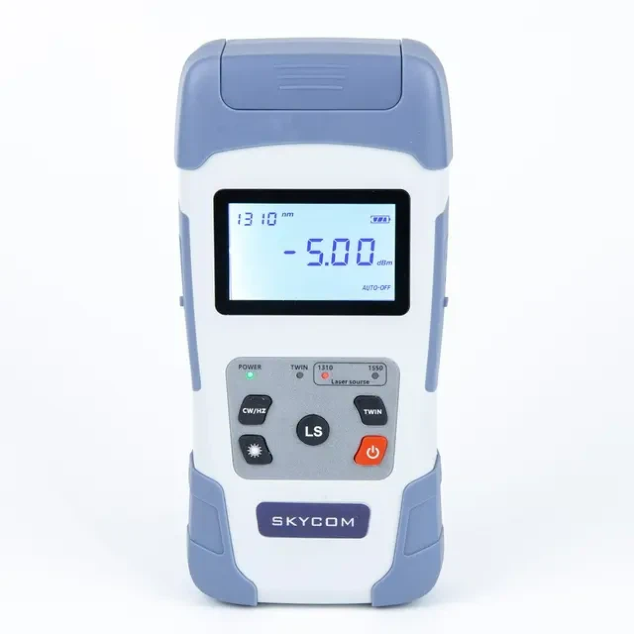
A PON power meter is designed for a more specialized testing scenario. Passive optical networks create different service conditions from ordinary point-to-point fiber links, and that changes what technicians need to verify in the field. Because of those service structures, a general testing method may not always provide the most useful result.
This is why the PON power meter has its own place in the fiber tester market. It supports measurement that is more directly matched to FTTH and PON service conditions, helping users confirm whether the line behaves as expected in that network type.
Buyers should prioritize a PON power meter when the work involves FTTH installation, PON activation, access-network maintenance, or repeated service checks in PON environments. In those situations, network fit matters as much as basic testing capability.
For teams that mainly work in PON service environments, choosing this specialized tester often leads to more relevant results and more efficient field work.
Basic fiber testers are highly useful, but they are only one layer of a complete workflow. In mature operations, they often work alongside fusion splicers and OTDR equipment. A splicer handles fiber joining. An OTDR is used for deeper fault location and event analysis. Basic testers support fast verification, routine inspection, and service-side checking.
This layered approach is important because different tasks require different depths of information. A power meter, VFL, fiber identifier, or PON meter can answer many practical field questions, but advanced diagnosis still belongs to tools designed for that purpose.
Many buyers do not need every tool at once. A smarter approach is often to begin with the tester type that matches the most common job, then expand as work becomes more varied. A team may start with an optical power meter and light source, then add a VFL for faster visible checks, or a fiber identifier for live-network maintenance, or a PON power meter for FTTH work.
This kind of gradual planning helps build a more suitable testing kit without unnecessary purchases. It also makes the buying process feel more practical and less overwhelming.
Tester Type | Main Purpose | Best Network Scenario | Key Advantage | Buyer Notes |
Optical Power Meter + Light Source | Measure signal level and support loss checks | Installation, acceptance, maintenance | Clear measurable results | Good foundation for routine testing |
Visual Fault Locator | Spot visible breaks, bends, and leakage | Short runs, patch cords, quick inspection | Fast and simple operation | Best as a quick-check tool |
Fiber Identifier | Check live fiber without disconnecting | Active networks and maintenance work | Non-intrusive line verification | Very useful in dense cable environments |
PON Power Meter | Verify service-side PON signal conditions | FTTH and PON service work | Better network-specific relevance | Best for access-network applications |
OTDR | Map faults and events over distance | Advanced troubleshooting | Deeper diagnostic capability | Usually complements basic testers |
The best tester type depends on the job, not the broad product name. If the main need is measurable link verification, an optical power meter and light source are often the right starting point. If the priority is fast visible inspection, a VFL makes more sense. If the team works around live lines, a fiber identifier is often the better choice. If the network is FTTH or PON-based, a PON power meter deserves priority.
This job-based approach is the easiest way to avoid confusion. It helps buyers compare products by field need rather than by general wording alone.
To narrow the shortlist, buyers can ask a few simple questions. What network am I working on? What result do I need from the test? Will this be used mainly for installation, maintenance, or service work? Do I need live-fiber or PON capability? These questions quickly guide the user toward the right category.
A fiber optic tester choice becomes much easier when the main types are clearly understood. SKYCOM Communications Ltd offers multiple tester categories for different fiber testing tasks, helping users build a more suitable and efficient workflow for installation, maintenance, FTTH, and service verification. If you want to find the right tester type for your application, contact us to learn more about SKYCOM’s fiber maintenance products.
The main types usually include optical power meters and light sources, visual fault locators, fiber identifiers, and PON power meters. Each one is designed for a different testing purpose.
For many installation tasks, an optical power meter and light source are the best starting combination because they support measurable link verification.
No. A visual fault locator is excellent for quick visible fault checks, but it does not replace power measurement, loss testing, or advanced diagnosis.
You should prioritize a PON power meter when your work mainly involves FTTH or PON service environments where network-specific signal checking is required.


