A Fiber Tester is often the first term people search when they need to check whether a fiber link is working, confirm signal quality, or solve a field problem more efficiently. The term sounds simple, but it does not refer to just one product. In practice, it describes a group of tools used to verify, inspect, and support fiber network quality. For installers, maintenance teams, contractors, and project buyers, understanding this category helps reduce guesswork, improve testing accuracy, and choose the right tool for the right task. As a professional supplier in China’s optical fiber industry, Nanjing SKYCOM Communications Ltd has focused on fiber maintenance devices since 2010, helping customers worldwide build more reliable testing workflows.
Many first-time buyers assume a fiber tester is one handheld device that can do every job. In real field work, that is rarely true. A fiber tester is better understood as a practical category that includes several tools used in different testing situations. Depending on the task, it may refer to an optical power meter, optical light source, visual fault locator, fiber identifier, or PON power meter.
This matters because fiber testing is not one single action. A technician may need to verify signal presence, measure power, check continuity, identify live fiber, or confirm a PON service line. These are related needs, but they are not identical. That is why buyers should not treat all fiber testing tools as interchangeable.
The term matters because many users begin with a broad search but do not yet know which function they actually need. Someone searching for a fiber optic tester may be trying to solve a link problem, but the correct tool depends on the testing goal. If the main need is basic power or loss measurement, an optical power meter and light source may be the right choice. If the goal is visible fault detection, a visual fault locator may be more practical. If the task involves active fiber identification, then a fiber identifier is more suitable.
Understanding this early helps buyers avoid vague inquiries and poor product matches. It makes the selection process faster and more accurate.
One of the most common reasons to use a fiber tester is to answer a basic but important question: is the link working properly? A fiber cable may look fine from the outside while still failing to carry a stable signal. A connector may be installed, yet optical performance may still be unacceptable. Fiber testing tools help technicians verify whether light is present, whether power levels are reasonable, and whether a link is ready for service.
This is especially important during installation and commissioning. Before a team leaves the site, the link should be checked rather than assumed to be ready. The same applies during repair work. A connection is not truly restored until the test result shows the optical path performs correctly.
Fiber testers also help identify small issues before they become major service problems. Common field issues include broken fiber, sharp bends, dirty connectors, unexpected loss, and uncertainty about whether a fiber is live or dark. These problems can lead to weak performance, callbacks, or network interruption if they are not caught early.
The value of a fiber tester is not only in measurement. It is also in prevention. Better testing reduces repeat work, improves reliability, and gives both technicians and buyers more confidence in the network condition.
Fiber testers are widely used during installation because new links must be verified before handover. After cable laying, splicing, patching, or termination, technicians need a practical way to confirm that the optical path is complete and performing as expected.
Testing at this stage helps teams discover issues before they become project delays. It also supports smoother commissioning because each section can be checked step by step instead of waiting until the entire network is activated.
Fiber testers are equally useful after the network is already in service. Maintenance teams use them for routine checks, problem isolation, and repair verification. When service performance drops, the first need is often a quick field check rather than a full analysis.
A visual fault locator may reveal an obvious break or bend. A power meter may show whether received optical power is too low. A fiber identifier may help distinguish a live line from an inactive one. A PON power meter may support FTTH or access-network service work. This makes fiber testers practical tools throughout the full lifecycle of the network.
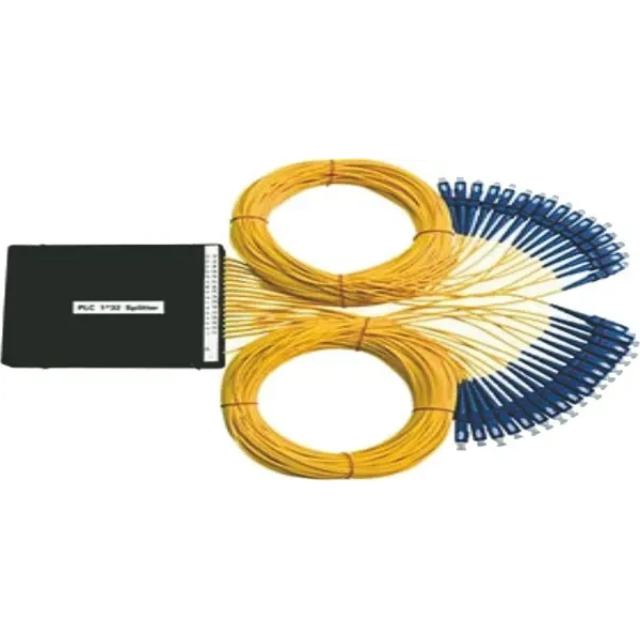
The optical power meter and optical light source are among the most common fiber testing tools. Used together, they help measure signal level and evaluate link loss. For many installers and maintenance teams, this pair is the starting point for reliable fiber verification.
These tools are valuable because they provide more than a simple pass-or-fail answer. They help users understand actual link condition, which is especially useful during acceptance testing and maintenance work.
Other tools in the fiber tester category are designed for faster on-site checks. A visual fault locator helps technicians spot visible breaks, bends, or leakage points in accessible fiber sections. It is simple, fast, and useful for basic troubleshooting.
A fiber identifier is designed for live-fiber recognition without interrupting service. This is particularly important in active networks where disconnecting the wrong cable can create avoidable disruption.
A PON power meter is more suitable for PON environments, where service conditions differ from standard point-to-point links. Each of these tools fits a different field scenario, which is why the category is broader than many buyers first expect.
Tool Type | Main Function | Typical Use Stage | Best For | Basic Output/Result |
Optical Power Meter | Measures received optical power | Installation, maintenance | Signal level verification | Power reading |
Optical Light Source | Sends stable optical signal | Installation, acceptance | Loss testing with meter | Test signal output |
Visual Fault Locator | Finds visible breaks and bends | Inspection, troubleshooting | Short-range visible checks | Visible red light leakage |
Fiber Identifier | Detects live fiber without disconnecting | Maintenance on active networks | Live/dark fiber recognition | Signal presence and direction |
PON Power Meter | Measures PON service signals | FTTH and PON work | PON link verification | PON wavelength power reading |
Fiber testers play an important role in daily verification, but they are not meant to replace every other fiber maintenance device. In many workflows, they are used alongside fusion splicers and OTDR equipment. A splicer handles fiber joining, while an OTDR supports deeper fault location and event analysis. A fiber tester fills the practical middle ground by helping technicians verify link condition quickly in normal field work.
This makes fiber testers highly useful even for teams that already have advanced equipment. Not every job requires full trace analysis, but many jobs require fast confirmation.
Many users benefit more from a small combination of tools than from one all-purpose unit. A contractor may use a power meter and light source for standard verification while carrying a visual fault locator for faster checks. A maintenance technician may also need a fiber identifier when working around active lines. A PON service team may need a dedicated PON power meter.
That does not mean every buyer needs a large tool kit from the beginning. It means the best choice depends on the actual workflow and service environment.
Before comparing product models, buyers should first ask what they need to test. Do they need to verify signal presence, measure optical loss, identify a live fiber, or support PON field work? These questions are more important than price at the beginning, because even an inexpensive tool is a poor investment if it does not match the application.
When users understand what a fiber tester really includes, the buying process becomes much easier. They stop searching for one vague solution and start looking for the function that matches the job. That leads to better product matching, clearer communication, and more efficient shortlisting.
A fiber optic tester is not just a simple accessory. It is part of how modern fiber networks are checked, maintained, and kept reliable. Nanjing SKYCOM Communications Ltd continues to support global customers with practical testing solutions for installation, inspection, and maintenance. If you are planning your fiber testing workflow and want to find the right product for your application, contact us to learn more about SKYCOM’s fiber maintenance solutions.
A Fiber Tester is used to inspect and verify fiber optic links. It can help confirm signal presence, measure optical power, check continuity, identify live fiber, and support troubleshooting.
In most cases, it refers to several tools rather than one single instrument. Common examples include an optical power meter, optical light source, visual fault locator, fiber identifier, and PON power meter.
For many installation tasks, an optical power meter and optical light source are a practical starting combination because they support more reliable link verification.
Because different tools solve different problems. Understanding the testing purpose helps buyers choose a more suitable product and avoid mismatched purchases.


