Views: 0 Author: Site Editor Publish Time: 2026-11-19 Origin: Site
Fiber optic technicians operate in brutal, highly demanding environments where microscopic precision directly dictates overall network reliability. Whether you are working in a sterile data center or suspended in a bucket truck fighting harsh winds, the quality of your tools is paramount. A single poorly executed splice can crash an entire network segment. These failures inevitably lead to significant signal loss, expensive maintenance truck rolls, and severely dissatisfied clients.
Recent industry data shows a massive acceleration in global 5G backhaul and rural broadband deployments. Network operators are pushing for faster rollout speeds with tighter optical budgets. This global trend rapidly shifts market demand away from bulky legacy units. Today's field engineers require smart, ultra-compact fusion splicers. These modern devices deliver cloud-based reporting and ruggedized portability without sacrificing microscopic accuracy. Navigating this equipment market can be incredibly overwhelming due to complex alignment technologies and varying price points.
This comprehensive guide serves as your ultimate engineering resource to evaluate the market objectively. We cover the nuanced differences between alignment methods, top equipment recommendations, and vital maintenance protocols. By understanding these core concepts, professionals can make perfectly informed purchasing decisions that align seamlessly with their daily fieldwork.
Alignment Types Dictate Application: Core alignment provides necessary precision for long-haul networks. Cladding alignment offers a highly cost-effective solution for fiber-to-the-home and local area network deployments.
Portability Drives Daily Output: Modern technicians require compact, ruggedized equipment. High-capacity batteries are mandatory for extended field operations.
Total Cost of Ownership: The true cost of an instrument extends beyond the sticker price. Buyers must factor in electrode lifespan, routine maintenance, and required accessories like precision fiber cleavers.
Optimal Choice for Last-Mile: Industrial portable models deliver the perfect balance of splicing speed, environmental durability, and precision for residential installations.
At its foundation, a splicing machine is a highly sophisticated precision instrument. It is designed to align two microscopic silica glass fibers perfectly and melt them together using a precisely controlled electric arc. Modern telecommunications networks carry massive amounts of data via light pulses. Therefore, the precision of this physical connection is absolutely non-negotiable.
In fiber optics, every single connection point introduces a minute amount of signal loss measured in decibels. Network engineers design systems with a strict optical budget. This budget dictates the maximum allowable light loss before the transmission degrades or fails entirely. A premium machine ensures that splice loss remains incredibly low, typically less than 0.02 decibels for single-mode fiber. Substandard equipment or poorly maintained optics can easily result in losses exceeding 0.05 decibels. Over a long cable run featuring multiple splice enclosures, these high-loss events compound. This ultimately leads to severe network attenuation and compromised data integrity.
Beyond optical performance, the right equipment directly impacts a technician's daily output and a contracting company's bottom line. Techs frequently find themselves in challenging physical scenarios. You might be cramped in a poorly lit basement, navigating a muddy roadside trench, or balancing on an aerial platform. A fast, reliable machine drastically reduces the time spent per termination. When a device features rapid heating times and automated alignment, operators can complete large-scale neighborhood rollouts much faster. Consequently, reliable gear prevents the need for costly rework to fix failed splices, thereby protecting the contractor's profitability.
Understanding the fundamental technological differences in alignment methods is the crucial first step in matching the machine to your specific job requirements. Making an uninformed choice here can lead to either compromised network performance or thousands of dollars wasted on unnecessary technology.
Feature | Core Alignment | Cladding Alignment |
|---|---|---|
Alignment Method | Aligns the actual light-carrying core | Aligns the outer glass cladding via V-groove |
Motor System | Advanced 6-motor system | Standard 4-motor system |
Best Application | Long-haul telecom, high-speed backbones | Fiber-to-the-home, enterprise networks, LAN |
Typical Splice Loss | 0.01 to 0.02 decibels | 0.02 to 0.03 decibels |
Equipment Cost | Premium investment | Highly cost-effective |
Core alignment technology represents the absolute highest standard of precision in the telecommunications industry. These sophisticated machines utilize a Profile Alignment System with multiple high-resolution cameras and six localized motors. This setup allows the machine to view and align the actual light-carrying core of the fiber. The inner core of a single-mode fiber is a mere 9 microns wide. Aligning it perfectly requires immense computational power and superior optics. This technology is mandatory for inter-city telecommunications and high-speed backbone installations where strict tier-1 testing applies.
Instead of looking at the microscopic core, these units align the outer cladding of the fiber. The cladding is typically 125 microns in diameter. They rely on a four-motor system to adjust the fibers within an active V-shaped groove. During the melting process, the natural surface tension of the molten glass helps pull the fibers into alignment. Thanks to modern manufacturing techniques, the core is almost always perfectly concentric within the cladding. This makes the cladding alignment assumption highly reliable. These units are significantly more compact, highly affordable, and exceptionally effective for shorter distances.
When evaluating datasheets and technical specifications, engineering professionals must prioritize critical hardware metrics. This ensures you are investing in a reliable field tool rather than a fragile laboratory instrument.
Time is money in the trench. Operational speed is paramount in high-volume environments. Top-tier industrial models currently offer automated splice times of just 6 seconds. However, the splice itself is only half the battle. The protective heat shrink sleeve must then be melted over the fragile joint. Look for machines featuring rapid tube heating times of 15 seconds or less. This rapid cycle minimizes idle waiting and maximizes daily output across a large deployment site.
Field technicians rarely have the luxury of reliable AC power when working on utility poles or in new construction zones. Therefore, high-capacity lithium-ion batteries are critical. A professional-grade optical fiber fusion splicer should feature at least a 5200mAh battery. This massive capacity ensures the machine can comfortably handle up to 300 continuous splice-and-heat cycles on a single charge. You can work an entire 10-hour shift without tethering yourself to a vehicle inverter.
Fiber optic deployment is inherently an industrial job. The equipment must withstand drop impacts from tailgates, blowing dust from construction sites, and sudden rainstorms. Buyers should look for specific Ingress Protection ratings, such as IP52. Thick rubberized bumpers and reinforced chassis designs are essential for protecting delicate internal cameras and mirrors from blunt force trauma.
Clear visibility of the microscopic fiber alignment process is necessary. Technicians must manually verify that the glass is clean and properly seated. A bright, 5-inch high-resolution LCD screen is indispensable. More importantly, the screen must possess high luminance to remain legible in glaring outdoor sunlight. Magnification capabilities of up to 500x allow the user to inspect the fiber end-face for microscopic dirt before initiating the plasma arc.
The telecommunications industry encompasses various disciplines. No single machine is universally perfect. Selecting the right tool depends heavily on your specific operating environment, deployment scale, and budget constraints.
For technicians working on inter-city backbone networks or repairing legacy fiber lines, premium core alignment models remain the undisputed industry standard. These heavy-duty machines utilize advanced 6-motor technology to guarantee ultra-low splice losses. They excel even when dealing with older, slightly mismatched, or non-concentric fibers. While they carry a premium price tag, their adherence to strict telecom tier-1 standards makes them indispensable for critical infrastructure projects.
The explosive global expansion of residential fiber networks has created a massive demand for machines that prioritize speed, lightweight design, and ruggedness. Technicians frequently work in incredibly tight spaces, such as residential drop boxes or aerial enclosures. Bulky legacy machines are simply impractical in these scenarios.
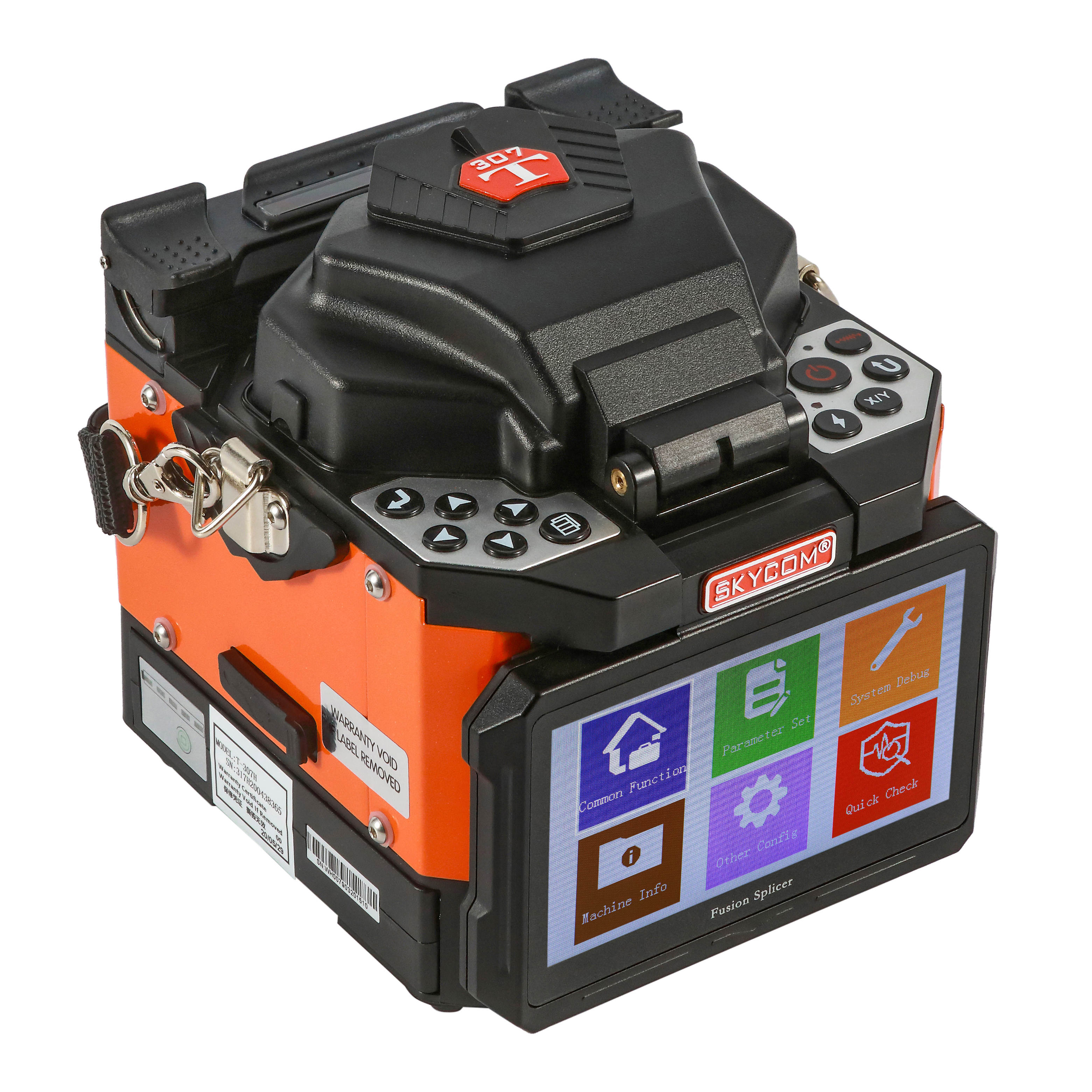
For these demanding deployments, an industrial portable FTTH fusion splicer offers the absolute optimal balance of speed, durability, and precision. These active V-groove cladding alignment machines are specifically engineered to be highly mobile without sacrificing industrial-grade toughness. They provide blisteringly fast splicing cycles, intuitive touchscreen interfaces, and cost-effective performance. This allows contractors to scale their operations efficiently without overspending on core-alignment features they do not need.
The decision between alignment technologies is arguably the most common dilemma buyers face. Carefully assessing your primary workflow is the key to making the financially and technically correct choice.
You should secure a core alignment machine if your projects involve long-distance telecommunications spanning over 20 kilometers. Older cables often suffer from core eccentricity, meaning the core is not perfectly centered. A core alignment machine actively detects and corrects this flaw to ensure a perfect connection. If your client contracts mandate strict ultra-low loss thresholds, this technology is mandatory.
In contrast, cladding alignment is the most logical and economical choice for residential rollouts, data center patching, and local area networks. Modern optical fibers are manufactured with incredibly strict tolerances. The core is almost always perfectly centered within the cladding. Aligning the outer surface naturally aligns the inner core. For technicians working on high-volume drop cables where portability and rapid workflow are prioritized, active V-groove machines deliver exceptional results at a fraction of the cost.
Setting realistic financial expectations is crucial for procurement managers. The market is generally segmented into distinct pricing tiers based on underlying technology and build quality. Basic entry-level models are functional for short-distance work but often lack robust weatherproofing. Mid-range industrial portable machines represent the sweet spot for field contractors. They feature ruggedized exteriors and excellent battery life. Premium core alignment models serve as the flagship devices for Tier-1 telecom contractors.
When establishing a budget, buyers must remember that the splicing unit itself is only part of the investment. Technicians must also account for recurring consumable costs. A high-precision auto-rotating fiber cleaver is absolutely mandatory. A bad cleave will ruin a splice regardless of how expensive the splicer is. Additional ongoing costs include replacement electrodes, high-purity isopropyl alcohol, lint-free wipes, and thermal stripper tools.
Field veterans understand that purchasing top-tier equipment is only the first step. Meticulous maintenance ensures a decade of reliable service and consistently low splice losses. Neglecting basic care is the leading cause of field failures.
The vast majority of splice errors and high-loss joints are caused by microscopic dust and debris. Technicians must adopt a strict daily cleaning regimen. Using only high-purity isopropyl alcohol and specialized lint-free swabs, operators should gently clean the V-grooves, the objective lenses of the cameras, and the LED mirrors. Even a single invisible speck of dust in the V-groove can offset the fiber alignment. This results in a rejected splice or a highly fragile joint.
The electric plasma arc that melts the glass is highly sensitive to environmental changes. Differences in altitude, ambient temperature, humidity, and normal electrode wear will alter the intensity of the arc. Technicians must perform an automated arc calibration every time they change geographical locations or experience a significant weather shift. This simple process allows the machine to test-melt a scrap fiber and automatically adjust the electrical current. It ensures the perfect melting temperature for optimal splice integrity.
Determining the best equipment depends entirely on the specific, day-to-day demands of the technician's workload. For those managing long-haul telecommunications and repairing legacy networks, a premium 6-motor core alignment machine is an unavoidable necessity. However, for the vast majority of modern technicians focused on the booming residential and data center markets, an industrial portable machine is undoubtedly the smartest investment.
By prioritizing essential features like rapid 6-second splicing, rugged durability, and reliable 5200mAh battery life, professionals can drastically improve their field efficiency. Investing in a high-quality, properly maintained machine pays for itself by eliminating costly rework and speeding up job completion times. Upgrade your toolkit today to meet the demands of modern fiber optic deployment. For reliable, high-performance equipment tailored to field technicians, explore the advanced fusion splicers at Skycomtech and secure the operational edge your team needs.
With diligent maintenance and regular servicing, a high-quality machine can reliably last between 5 to 10 years in the field. However, rapid advancements in splicing speed, touchscreen interface technology, and lithium battery capacity often prompt technicians to upgrade their equipment before the machine actually reaches the end of its physical lifespan.
Yes, a ribbon machine can technically be used for single fibers. However, it requires specific interchangeable fiber holders to secure the single strand properly. While functional in a pinch, it is generally not as efficient, fast, or precise as using a dedicated single-fiber machine for high-volume single-mode deployments.
Electrodes should typically be replaced every 3,000 to 5,000 splices, depending on the manufacturer's specific guidelines. You should also replace them immediately if the machine consistently indicates an arc error, produces a visibly unstable plasma discharge, or shows low arc power that a standard cleaning and arc calibration routine cannot resolve.
For single-mode fiber, an acceptable splice loss generally ranges from 0.01 to 0.03 decibels. For multimode fiber, it is typically around 0.01 decibels. Any single splice resulting in a loss greater than 0.05 decibels usually indicates a flawed cleave angle, dirt trapped in the V-groove, or poor mechanical alignment. This warrants an immediate re-splice to protect the network's optical budget.
Repeated arc calibration failures are almost always environmental or maintenance-related. The most common culprits are worn-out electrodes that can no longer hold a stable plasma arc, or severe dirt accumulation on the objective lenses and V-grooves. Extreme and sudden shifts in altitude or temperature can also cause temporary calibration errors. Thoroughly clean the optical pathways, replace the electrodes if they have exceeded their cycle count, and run the calibration test again.
Your choice depends entirely on the type of cable you deploy most frequently. Mass ribbon machines are designed to splice up to 12 fibers simultaneously. They are essential for hyperscale data centers and high-density trunk cables where terminating hundreds of strands quickly is required. Conversely, if your daily work involves standard loose-tube cables, residential drop cables, or security camera installations, a single fiber machine is significantly more practical, precise, and cost-effective.