Views: 0 Author: Site Editor Publish Time: 2026-01-14 Origin: Site
A fusion splicer is a key piece of equipment used in the installation and maintenance of fiber optic networks. It plays a crucial role in joining two optical fibers to create a continuous, low-loss connection between them. This process, known as fusion splicing, is essential in ensuring that data transmission across fiber optic cables remains fast, efficient, and without interruption. Fusion splicers achieve this by using heat to fuse the ends of two fiber optic cables, resulting in a near-perfect optical connection.
As fiber optic networks become more widespread and integral to communications infrastructure, the importance of reliable fusion splicing equipment has grown. A fusion splicer ensures that the signal strength in fiber optic systems remains high and consistent, making it indispensable for network technicians, installers, and maintenance personnel.
In this article, we’ll take a deep dive into how fusion splicers work, their types, benefits, and where and how they are used in fiber optic network setups. By understanding the functionality and advantages of fusion splicing, you will better appreciate its role in delivering fast and secure communication networks.
Fusion splicing is a critical process in the creation of fiber optic connections, enabling high-performance data transmission across vast distances. It involves the precise alignment of the ends of two optical fibers followed by heating them to their melting point, allowing the fibers to fuse into a continuous, low-loss connection. This process is highly efficient and produces permanent connections that ensure the longevity and reliability of the network.
The fusion splicing process begins by preparing the optical fibers. The protective coating, including the outer jacket, must be stripped off the fibers to expose the glass core. After the fibers are carefully cleaned to remove dust or debris, they are precisely aligned in the fusion splicer. In core alignment fusion splicing, the fiber cores are aligned to ensure a perfect light path between them, while in cladding alignment, the alignment is based on the fiber’s outer cladding.
Once the fibers are positioned inside the fusion splicer, an electric arc is used to heat the fiber ends until they melt and fuse together. The splicer then cools the joint to create a seamless, low-loss connection. The result is a permanent bond that maintains signal integrity over time, as fusion splicing produces a continuous fiber that doesn't suffer from degradation, unlike some other methods like mechanical splicing.
Fusion splicing offers several key benefits, including:
Low Insertion Loss: One of the most significant advantages of fusion splicing is its ability to produce a connection with minimal insertion loss. Insertion loss refers to the amount of signal loss when the light passes through the splice. Fusion splicing ensures that the signal remains intact over long distances, making it the preferred method for high-speed communication systems like telecommunications, internet connections, and cable networks.
Permanent Connection: Unlike mechanical splicing, where fibers are held together by adhesives or mechanical pressure, fusion splicing creates a permanent connection. The bond created by fusion splicing is strong and durable, ensuring that the splice won't degrade or loosen over time, even with temperature fluctuations or vibrations. This permanence is particularly beneficial in environments where reliability is crucial, such as in data centers or telecom networks.
Durability: Fusion-spliced fibers are highly resistant to environmental conditions like temperature variations and moisture. This durability makes fusion splicing the preferred method for outdoor or industrial applications, where the fibers may be exposed to harsh weather, humidity, or other corrosive elements. The strength and longevity of fusion-spliced fibers reduce the need for frequent repairs, contributing to overall system reliability.
Minimal Maintenance: Once the splice is complete, there is little to no maintenance required, unlike other types of splicing where the connection may require periodic adjustments or re-tightening. Fusion splicing’s minimal maintenance requirements make it a cost-effective choice in the long term, especially in large-scale installations where downtime and maintenance costs can add up.
| Advantage | Description | Key Benefit |
|---|---|---|
| Low Insertion Loss | Fusion splicing results in minimal signal loss when light passes through the splice. This ensures that the signal remains intact over long distances. | Ensures high-performance signal transmission, ideal for telecommunications, internet, and cable networks. |
| Permanent Connection | Fusion splicing creates a permanent bond between fibers, unlike mechanical splicing, which relies on adhesives or pressure. | Provides a strong, durable connection that won't degrade or loosen over time, ensuring reliability. |
| Durability | Fusion-spliced fibers are resistant to environmental factors such as temperature changes and moisture, making them ideal for outdoor or industrial applications. | Increases the lifespan of the fiber optic connection, reducing the need for frequent repairs. |
| Minimal Maintenance | Once the splice is completed, no ongoing maintenance is required, unlike mechanical splicing that may require periodic adjustments. | Cost-effective in the long term, especially for large-scale installations where maintenance can be costly. |
Fusion splicers come in various types, each designed for different use cases and requirements. The most common types of fusion splicers are:
Core Alignment Fusion Splicers: These splicers align the fiber cores precisely to ensure that the light path is uninterrupted, offering the highest quality splice with the lowest loss. They are typically used in more critical applications where the best performance is required.
Cladding Alignment Fusion Splicers: These splicers align the cladding (the outer layer of the fiber) instead of the core. While the splice quality may be slightly lower than core alignment splicers, they are more affordable and faster to use.
Ribbon Fusion Splicers: These splicers are designed to handle multiple fibers at once, typically used in high-density applications like data centers or large communication networks. They can splice up to 12 fibers at once, saving time and increasing efficiency.
Each type of fusion splicer is tailored to specific splicing needs, so choosing the right one depends on factors like the number of fibers being spliced and the application’s importance.
Higher Quality and Efficiency: Fusion splicing creates more reliable and stronger connections than other methods like mechanical splicing, ensuring better network performance. The resulting low-loss connection improves signal transmission and reduces the need for repairs or re-splicing.
Lower Maintenance Costs: Once a fusion splice is completed, it requires little to no maintenance, unlike other types of connections that may need to be checked or re-secured regularly. This reduces operational costs and downtime.
Compact and Easy to Use: Modern fusion splicers are compact, lightweight, and easy to operate. Many models now come with intuitive user interfaces, making them suitable for technicians with varying levels of experience.
Adaptability in Harsh Environments: Fusion splicing works in most environmental conditions, including outdoors or in harsh climates. Specialized fusion splicers are also designed to handle high-pressure conditions, making them perfect for critical infrastructure projects.
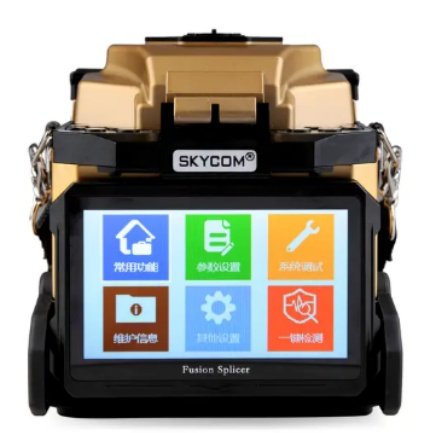
Fusion splicing plays a critical role in a variety of applications, including:
Telecommunications: Fiber optic networks are the backbone of telecommunications infrastructure, enabling fast, high-capacity communication over long distances. Fusion splicers ensure that these networks maintain optimal performance.
Data Centers: With the growing demand for data processing and storage, data centers rely heavily on fiber optic connections for efficient data transfer. Fusion splicing ensures that the data transmission within these centers is fast, reliable, and secure.
Fiber to the Home (FTTH): As broadband services continue to expand, fusion splicing is used to create high-quality connections for FTTH networks, which bring fiber optic connections directly to homes for faster internet services.
Industrial Applications: In industrial settings, where reliability and high performance are critical, fusion splicing is used for connecting sensors, control systems, and other equipment that require robust communication networks.
Using a fusion splicer requires careful attention to detail to ensure the splice is done correctly. Below are the general steps for using a fusion splicer:
Prepare the Fibers: Start by stripping the fiber optic cables of their protective coating and cleaning them to ensure there are no contaminants.
Align the Fibers: Insert the fiber ends into the splicer and align them accurately. The splicer will typically have an automatic alignment feature to make this step more efficient.
Fusion Process: The splicer will then initiate the fusion process, using an electric arc to melt the fiber ends together.
Check the Splice: After the fusion process is complete, check the splice quality by inspecting the splice loss and ensuring the fibers are correctly fused.
Protection: Once the splice is completed, apply a protective sleeve to the splice to shield it from environmental damage.
When selecting a fusion splicer, it’s essential to choose a reliable supplier with high-quality equipment and exceptional customer support. At Nanjing SKYCOM Communications Ltd., we specialize in providing top-of-the-line fusion splicers designed to meet the diverse needs of the telecommunications industry. Our equipment is built to deliver high-quality splicing with low loss, ensuring the success of your fiber optic network installations.
We offer a range of fusion splicing solutions suitable for both large-scale commercial projects and small, localized installations. Our team is dedicated to helping you select the right equipment and provide the support you need to ensure your projects are completed efficiently and successfully. If you’re looking for a fusion splicer that combines high performance, reliability, and ease of use, contact us today to learn more about our offerings.
What is the difference between core alignment and cladding alignment fusion splicing?
Core alignment fusion splicing ensures that the light path of the fibers is aligned precisely, providing higher-quality connections. Cladding alignment is less precise but still offers reliable performance for general use.
How do I maintain a fusion splicer?
Regular maintenance includes cleaning the electrodes, inspecting the fiber holders, and checking the splicer’s software for updates. Ensuring proper storage and handling of the equipment will also extend its lifespan.
Can fusion splicing be used for both single-mode and multi-mode fibers?
Yes, fusion splicing is suitable for both single-mode and multi-mode fibers, although the process may vary slightly depending on the type of fiber being spliced.
How long does a fusion splice last?
Fusion splices are known for their durability and can last as long as the fiber optic cable itself, with minimal degradation over time.


