Views: 0 Author: Site Editor Publish Time: 2026-01-29 Origin: Site
Fiber optic technology has been transforming the way we connect and communicate. Whether it’s for internet services, telecommunication, or network infrastructure, the demand for faster and more reliable communication has made fiber optic cables a crucial part of modern communication systems. As fiber optic networks expand, the role of the fusion splicer has become increasingly vital in ensuring high-quality, long-lasting connections.
Fusion splicing is the process of joining two optical fibers end-to-end using heat to fuse them together. Unlike traditional mechanical splicing, fusion splicing is precise, reliable, and creates a permanent bond. This article explores how fusion splicers are revolutionizing fiber optic installation and performance, enabling quicker, more accurate connections, and improving the overall quality of fiber optic networks.
Fusion splicing is a method used to join two optical fibers by melting their ends together. The process involves placing the fiber ends into a fusion splicer, which uses an electric arc to heat the fiber until it melts and fuses the ends into a continuous strand. This technique ensures that the fibers are aligned perfectly, minimizing signal loss and maintaining the integrity of the fiber optic network.
The use of fusion splicers has revolutionized the fiber optic industry by significantly improving the quality of fiber optic splices, reducing installation times, and enhancing network performance. The high precision of fusion splicing provides lower loss and reflection compared to mechanical splicing, making it the preferred method for connecting fiber optic cables.
Fusion splicers are specialized machines designed for the purpose of performing fusion splicing. These devices have evolved with technology to become faster, more accurate, and more efficient. Fusion splicers are essential in the installation and maintenance of fiber optic networks, ensuring that connections are both reliable and durable, with minimal signal loss and maximum efficiency.
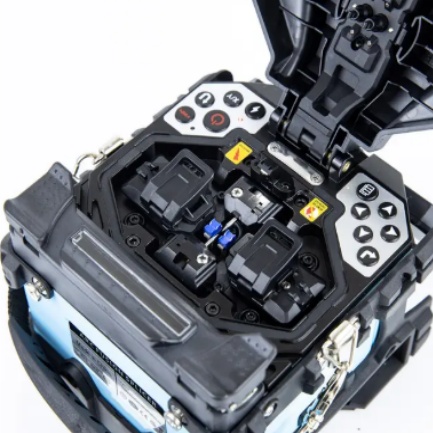
Fiber optic technology has transformed communication, offering faster speeds and better data transmission. The backbone of this high-speed technology lies in how fiber optic cables are connected. One of the key processes in setting up a reliable fiber optic network is splicing, or the method of joining two fibers together. Fusion splicing, which uses heat to fuse the ends of two fibers together, offers significant advantages over traditional mechanical splicing, particularly in terms of precision, durability, and overall performance.
One of the most significant advantages of fusion splicers over mechanical splicing is their precision. Fusion splicing ensures that the two fiber optic cables are perfectly aligned, ensuring minimal signal loss and degradation. When a fiber optic splice is performed, even a small misalignment can result in a higher level of splice loss, affecting the overall performance of the network. The precision of fusion splicing ensures that the fibers are joined in such a way that the light signal passing through them experiences minimal loss, resulting in more efficient and higher-performing networks.
Unlike mechanical splicing, where the fibers are held in place with adhesive and alignment v-grooves, fusion splicing involves precisely aligning the fibers end-to-end using a controlled arc to heat and fuse them together. This process creates a permanent bond that minimizes the loss and attenuation of the signal traveling through the connection.
Table 1: Comparison of Fusion Splicing vs Mechanical Splicing
Factor | Fusion Splicing | Mechanical Splicing |
Splice Loss | Very low, typically <0.1 dB | Higher splice loss |
Cost | Higher initial cost, but more durable and reliable | Lower initial cost, but less durable |
Time Efficiency | Faster process with specialized equipment | Slower process, especially for large projects |
Network Performance | High performance, minimal signal degradation | Moderate performance, higher signal loss |
Fusion splicing's low splice loss is crucial for maintaining high-performance networks, especially in telecommunications, data centers, and broadband networks. These applications require fast, reliable, and efficient signal transmission, which fusion splicing facilitates by minimizing light loss during the splice.
Another key benefit of fusion splicers is the speed at which they complete the splicing process. Fusion splicers can make splices much faster than traditional mechanical splicing methods. This is particularly valuable in large-scale fiber optic installations, where time efficiency can significantly impact the overall cost and project timeline.
Modern fusion splicers come with automated features and improved algorithms that can quickly determine the optimal splice point, align the fibers, and execute the splice with minimal manual intervention. The automation reduces the likelihood of human error, speeds up the process, and ultimately helps technicians complete fiber optic network installations more efficiently.
This is especially critical when dealing with projects that have tight deadlines or require the installation of extensive fiber networks, such as in telecommunications infrastructure or for internet service providers. Speed and accuracy are paramount, and fusion splicing ensures both.
Once fusion splicing is complete, the connection created between the fibers is incredibly durable. The fusion splicer creates a permanent bond between the fiber ends, making the splice resistant to temperature changes, moisture, and other environmental factors. This ensures that the fiber optic connections last for years without the need for maintenance or re-splicing.
While fusion splicers might have a higher upfront cost compared to mechanical splicing tools, they offer greater long-term value. With the ability to make highly accurate, low-loss splices, fusion splicers reduce the need for future repairs, maintenance, and network downtime. Over time, the reduction in operational and repair costs makes fusion splicing a more cost-effective solution for fiber optic installations, especially when considering the scale of large fiber optic networks.
When selecting a fusion splicer, there are several key features that make certain models stand out. These features can make a significant difference in the efficiency, speed, and reliability of the fusion splicing process:
Core Alignment Precision: Ensuring that the fibers are aligned perfectly is crucial to achieving minimal splice loss. Advanced fusion splicers offer automatic core alignment systems that improve the accuracy and speed of the splicing process.
Durability and Weather Resistance: Since many fiber optic installations are done in the field, fusion splicers must be rugged and able to withstand various environmental conditions, such as dust, moisture, and extreme temperatures.
Speed and Efficiency: Modern fusion splicers come equipped with faster processing speeds, allowing operators to splice fibers quickly without sacrificing precision.
User-Friendly Interface: With advanced algorithms and automated features, a fusion splicer with an intuitive interface simplifies the splicing process, even for technicians with minimal experience.
With the increasing demand for high-speed data and internet services, fiber optic installations are expected to continue growing. The use of fusion splicers will be crucial in ensuring the success of these installations. As more industries and residential areas demand faster internet and more reliable communication systems, the role of fusion splicing will become even more essential in maintaining optimal performance across fiber optic networks.
The future of fusion splicers is bright, with ongoing advancements in technology. Future fusion splicers are expected to be even faster, more efficient, and more portable, providing solutions for increasingly complex installations. Additionally, the integration of artificial intelligence (AI) and machine learning in fusion splicers may help further automate the process, ensuring even higher precision and accuracy.
Fusion splicers are transforming the way fiber optic installations are conducted, offering high precision, reliability, and cost-effectiveness. Their ability to create low-loss, durable, and fast connections has made them the preferred method for professionals in the industry. As the demand for fiber optic networks continues to grow, fusion splicers will play an increasingly important role in ensuring the high-quality performance of these networks.
If you are looking for high-quality fusion splicing equipment, Nanjing SKYCOM Communications Ltd. provides cutting-edge fusion splicers that meet the evolving demands of the fiber optic industry. Contact them today to explore their product offerings and find the right solution for your fiber optic needs.
1. What is the difference between fusion splicing and mechanical splicing?
Fusion splicing uses heat to permanently fuse fibers together, offering low-loss and highly reliable connections, while mechanical splicing joins fibers with an adhesive, leading to higher splice loss and less durability.
2. How long does a fusion splice last?
A fusion splice can last for decades if properly executed, as it provides a permanent, durable connection that is resistant to environmental conditions.
3. Are fusion splicers expensive?
While fusion splicers can have a higher initial cost, they offer long-term savings due to their high precision, low splice loss, and reduced maintenance requirements.
4. Can I use a fusion splicer for both automatic and manual fiber optic cables?
Yes, fusion splicers are designed to work with various types of fiber optic cables, including both automatic and manual cables, providing flexibility in installation.


