Views: 0 Author: Site Editor Publish Time: 2026-01-26 Origin: Site
Fusion splicing is an essential technique used in fiber optic communications to join two optical fibers together permanently. This process ensures that the light passing through the fibers is transmitted efficiently, with minimal loss of signal. As fiber optic networks become increasingly prevalent in telecommunications, internet infrastructure, and other industries, mastering the fusion splicing technique is crucial.
In this article, we will walk you through the seven steps of performing a fusion splice, discussing each step in detail to help you understand the importance of precision and the proper techniques involved. At Nanjing SKYCOM Communications Ltd., we provide high-quality fusion splicing equipment and support to ensure your fiber optic installations are successful. Read on to discover the key steps in fusion splicing and how to achieve the best results for your fiber optic projects.
Before starting the fusion splicing process, it’s essential to gather and prepare the necessary tools and materials. Fusion splicing involves both delicate and precise actions, so having the right equipment in place ensures a smooth process.
Tools Required:
Fusion Splicer: The fusion splicer is the primary tool used for aligning and fusing the fibers. It provides precise control over the splicing process, allowing you to use an electric arc to join the fibers. Fusion splicers come with various features, including fiber alignment systems, arc fusion chambers, and fiber cleaving tools built-in, making them indispensable for fiber optic installations.
Cleaver: A precision cleaver is needed to create a clean and precise cut on the fiber ends. The cleaver is designed to make an exact 90-degree cut on the fiber, ensuring that the ends of the fibers are perfectly aligned for fusion. A high-quality cleaver is essential for achieving a low-loss splice.
Stripping Tools: Stripping tools are used to remove the outer protective coating from the fiber cables. It’s important to strip the coating without damaging the inner fiber, as any damage can affect the quality of the splice. Typically, you will use the stripping tool to remove the outer jacket, the buffer coating, and the cladding, exposing the core of the optical fiber.
Cleaning Wipes and Alcohol: Cleanliness is critical during the fusion splicing process. Contamination can affect the splice, leading to signal loss or failure. Cleaning wipes, often combined with isopropyl alcohol, are used to remove dust, dirt, oils, or any other contaminants from the fiber before splicing. Cleaning the fiber ensures that it is free from debris and ready for a precise splice.
Protective Sleeves: After the splice is completed, protective sleeves are used to safeguard the connection from environmental damage. These sleeves provide mechanical protection to the splice and prevent any external forces or environmental factors, like moisture or dust, from interfering with the fiber optic connection. Protective sleeves also help maintain the splice’s structural integrity.
Materials:
Optical Fiber: The fibers being joined should be of similar types and qualities for the best results.
Splice Sleeves: These sleeves protect the splice from damage after it has been completed.
Preparing these tools and materials beforehand ensures that the fusion splicing process is efficient and that all necessary steps are executed smoothly.
| Tools | Description | Purpose |
|---|---|---|
| Fusion Splicer | The primary tool used for aligning and fusing fibers with an electric arc. It offers precision in fiber alignment, fusion, and cleaving. | Used for the actual fusion process to connect optical fibers with minimal signal loss. |
| Cleaver | A precision tool that ensures a clean, precise cut on fiber ends. It makes a 90-degree cut to align fiber ends perfectly for fusion. | Creates a clean fiber cut to ensure proper alignment and minimal loss in the splice. |
| Stripping Tools | Tools used to remove the outer protective coating of fiber cables without damaging the inner fiber. | Removes the protective coating to expose the fiber core, ensuring a clean splicing surface. |
| Cleaning Wipes and Alcohol | Cleaning wipes combined with isopropyl alcohol to remove contaminants like dust, dirt, and oils from the fiber. | Ensures that the fiber is free of contaminants for a cleaner, more effective splice. |
| Protective Sleeves | Sleeves used after splicing to protect the fiber connection from external elements like moisture, dust, or physical strain. | Protects the splice and ensures it remains intact under environmental and physical stresses. |
The first step in the fusion splicing process is to strip off the outer coating of the fiber optic cables. The coating is typically made of a plastic or polymer material that needs to be removed to expose the glass fiber inside.
Steps for Stripping the Fiber:
Use the fiber stripping tool to carefully remove the outer protective coating of the fiber, typically about 1 to 2 inches, depending on the splice requirements.
Be careful not to damage the underlying glass fiber while stripping the coating.
After stripping, use clean wipes and alcohol to clean the bare fiber to remove any dust, oil, or contaminants that could interfere with the fusion process.
Proper stripping is essential to ensure that the glass fibers align correctly for fusion, leading to a successful splice.
Once the fiber coating is stripped, the next step is cleaving the fiber. Cleaving is the process of cutting the fiber in a precise, straight manner to ensure clean ends that can be fused properly.
Cleaving Process:
Place the fiber into a fiber cleaver and ensure it is aligned perfectly.
Use the cleaver to make a sharp, clean cut at a 90-degree angle.
After cleaving, inspect the fiber ends to ensure they are smooth, flat, and clean. Any irregularities can lead to poor fusion and increased signal loss.
A clean and accurate cleave is crucial for ensuring that the fibers will fuse correctly, providing optimal performance and minimal signal loss.
After the fibers are stripped and cleaved, the next step is to align them within the fusion splicer. Proper alignment is critical for achieving a low-loss splice. The fusion splicer uses a powerful microscope or camera system to display the fiber ends, allowing the technician to align them with high precision.
Alignment Process:
Place the cleaved ends of both fibers into the fusion splicer’s fiber holders.
Use the splicer’s viewing system to precisely align the fibers.
The fibers should be aligned so that the cores of both fibers match perfectly. Any misalignment will result in signal loss and a weaker splice.
Once the fibers are correctly aligned, they are ready for fusion.
The core part of the fusion splicing process is the actual fusion or melting of the fiber ends. This is done by applying heat to the fiber ends, which causes them to fuse together into a single continuous fiber.
Fusion Steps:
The fusion splicer applies a small electrical arc to the ends of the fibers, heating them to the point where they melt and fuse together.
The splicer monitors the process to ensure that the fibers fuse correctly and form a uniform, smooth connection.
The heat treatment also eliminates any air gaps, ensuring a solid connection between the fibers.
Fusion is a critical step, and the splicer must be properly calibrated to ensure the right amount of heat is applied to achieve a strong and reliable splice.
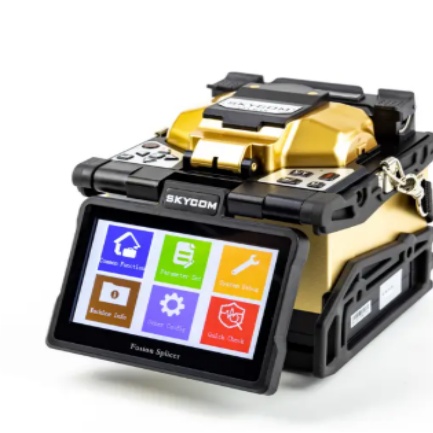
After the fibers are fused together, it is important to protect the splice to prevent damage or contamination. A splice protector is placed over the fusion joint to ensure that the splice remains intact and is shielded from mechanical stress or environmental factors.
Protecting the Splice:
Slide a splice protection sleeve over the fusion splice. This sleeve is typically made of heat-shrink material that will contract to fit snugly around the splice.
Use a heat source to shrink the sleeve, ensuring a tight fit that protects the splice from any external damage or strain.
Ensure that the sleeve is securely applied and the splice is fully protected before moving on to the next steps.
Protecting the splice helps to prolong the lifespan of the connection and ensures optimal performance in the long term.
Once the splice is complete and protected, the final step is testing the splice to ensure it is functioning correctly. Testing is essential to verify that the splice is of high quality and that signal loss is within acceptable limits.
Testing Process:
Use an optical time-domain reflectometer (OTDR) or fiber optic tester to check the splice quality.
Measure the insertion loss and return loss to determine the performance of the splice.
If any issues are found, repeat the fusion process or recheck the alignment to ensure the splice is up to standard.
Testing and inspecting the splice ensures that your fiber optic connection is reliable and performing at its best.
Fusion splicing is a precise and delicate process that requires attention to detail and the right equipment to achieve optimal results. By following the seven key steps—preparation, stripping, cleaving, alignment, fusion, protection, and testing—you can create high-quality, low-loss fiber optic connections that will last for years. At Nanjing SKYCOM Communications Ltd., we are committed to providing top-quality fusion splicing equipment and support to help you achieve the best results in your fiber optic projects.
If you're looking for reliable fusion splicing tools, equipment, or technical assistance, feel free to reach out to Nanjing SKYCOM Communications Ltd.. Our expert team is here to guide you through the process and ensure that your fiber optic installations are successful and efficient.
1. What is fusion splicing used for?
Fusion splicing is used to join two optical fibers together permanently, creating a continuous optical path for signal transmission with minimal loss.
2. How long does a fusion splice last?
With proper technique and equipment, fusion splices can last for many years, maintaining reliable signal strength and performance.
3. Can fusion splicing be done without special equipment?
No, fusion splicing requires specialized equipment such as a fusion splicer, cleaver, and fiber optic testers to ensure the splice is done properly.
4. What is the difference between fusion splicing and mechanical splicing?
Fusion splicing involves melting the fiber ends to create a continuous connection, while mechanical splicing aligns the fibers using an adhesive and a connector.


